
Some dogs tend to shed a lot, while others may may appear almost shed-free. Shedding depends largely on breed and coat type, but it can be managed with the right grooming routine and tools.
In This Article
Understanding why dogs shed and how to care for their coat can make a big difference in keeping your home and your dog comfortable.
Why Some Dogs Shed More
Shedding is a natural process that allows dogs to get rid of old or damaged hair and maintain a healthy coat.
Coat type plays a major role in how much dogs shed each year. For example, dogs with thick double coats, such as Golden Retrievers, are more likely to shed year-round.
Seasonal Shedding Explained
For dogs that shed seasonally, the heaviest shedding usually occurs in spring and fall. In spring, dogs lose their heavier winter coats to stay cool in warmer weather. In fall, they shed lighter hair to make way for thicker insulation.
You may notice increased hair around your home during these times. This is normal, but you may need to groom your dog more often on a temporary basis.
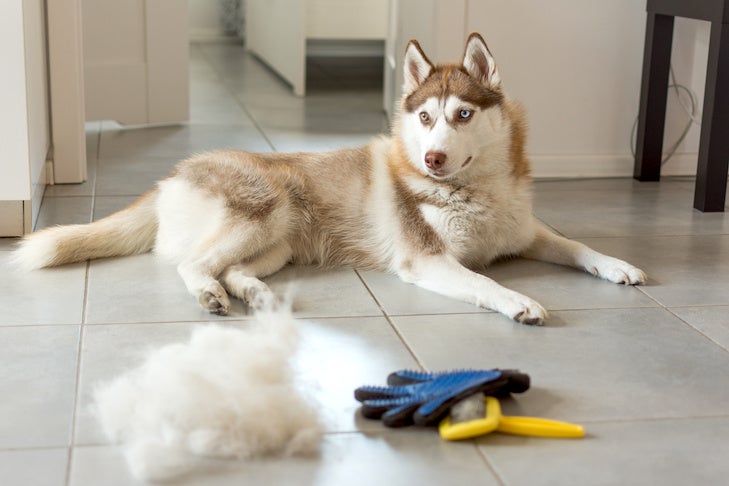
How Often Should You Groom Your Dog?
The right grooming schedule for your dog will depend on their coat type, length, and shedding pattern. While regular grooming is essential for all dogs, dogs that tend to shed excessively will typically need to be groomed more than those that don’t.
For example, dogs that shed heavily may need brushing several times a week or even daily during peak shedding periods. Lighter shedders still benefit from consistent grooming to remove loose hair and distribute natural skin oils.
Choosing a Brush for Your Dog
Choosing the right brush can make a big difference in your grooming process, especially if your dog sheds frequently.
Best Brushes for Dogs With Short Coats
Dogs with short coats, such as Beagles, Pugs, and German Shorthaired Pointers, benefit from simple grooming tools that loosen and remove dead hair effectively. Natural-bristle brushes and grooming gloves are good options.
To brush your short-coated dog effectively:
- Brush against the direction of hair growth first to loosen dead hair.
- Follow by brushing in the direction of hair growth to remove it.
- Repeat several times to distribute natural oils.
If using a grooming glove, massage the coat in circular motions, then smooth the coat in the direction of hair growth to lift away loose hair.

Brushes for Dogs With Longer or Double Coats
Dogs with longer coats, such as Pomeranians, Collies, and Pembroke Welsh Corgis, need tools that reach the undercoat where loose hair collects.
Slicker brushes work well for removing dead hair from dense coats. Brush in multiple directions until less hair is collected. During heavy shedding periods, switching to a coat rake or de-shedding tool can help remove large amounts of loose undercoat hair.
Taking your time helps prevent discomfort and protects the coat. When using these tools:
- Work in the direction of hair growth.
- Use gentle pressure, especially with tools that have blades.
- Remove tangles with a steel comb or a mat-splitting tool before brushing further.
When Shedding Might Signal a Health Issue
Although shedding is normal, excessive or unusual hair loss can point to underlying problems. Conditions such as hypothyroidism, congenital coat disorders, or allergies can all affect skin and coat health.
Watch for changes such as thinning fur, bald patches, or irritated skin. If you suspect a problem with your dog’s coat or skin, consult your veterinarian for guidance. They can evaluate your dog and suggest products or treatment recommendations, if needed.
Additional Ways to Manage Shedding at Home
Beyond regular brushing, bathing your dog with a shedding-control shampoo can help remove loose hair and maintain coat condition. Some dogs also do well with specialized grooming tools like pet vacuums, which can help collect loose hair during grooming sessions.
Recent Comments