
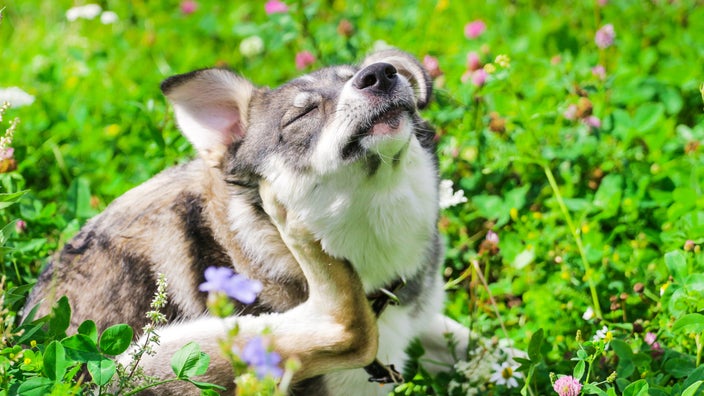
Like people, dogs can be allergic to various materials in the air. These materials are called allergens. And for dogs sensitive to these airborne allergens, they can experience signs of allergies.
Humans with seasonal allergies usually have runny eyes, a runny or stuffy nose, a scratchy throat, and other upper respiratory symptoms. But most dogs with seasonal allergies, on the other hand, have itchy and irritated skin. Since the symptoms show up in dogs’ skin, the condition is called atopic dermatitis, or atopy.
What are the symptoms of seasonal allergies in dogs?
The symptoms of seasonal allergies vary depending on your dog and what they are allergic to. Most dogs will show signs of irritation in their skin. But they can have other symptoms.
Other common symptoms of seasonal allergies include:
1. Scratching
Since allergies cause itchy skin for dogs, many can be spotted repeatedly scratching their skin or fur. Dogs with allergies who scratch themselves a lot can experience hair loss and excess shedding.
2. Chewing and licking their skin
The itchiness might also cause dogs with allergies to chew or lick their skin. This behavior can include biting at their skin, licking their paws, and licking their anal glands.
3. Red, inflamed, or infected skin
Dogs who scratch and chew their skin due to allergies might experience red and inflamed skin as a result. Sometimes, discoloration and thick elephant-like skin can develop, as well.
4. Hives
Hives can develop 6 to 24 hours after your dog is exposed to the offending allergen.
5. Hot spots
Constant scratching can lead to infections such as hot spots. Hot spots often look moist and red. Some might develop pus and increase in size.
7. Red, waxy, smelly, or inflamed ears
You might see inflammation in their ears. Or your dog’s ears might be red, waxy, and smelly. The infection can cause your dog to shake their head.
8. Rubbing their face
Some dogs with allergies might rub their face because of the itchiness. They may rub their face with their paws or on objects such as furniture. They might also rub their butt against the floor or carpet.
9. Sneezing more than usual
In a small percentage of dogs, allergies can affect the inside of their nose. The allergies can cause asthma or rhinitis for these dogs, which causes inflammation in the nose. Signs of rhinitis due to allergies include sneezing, nasal discharge, and labored breathing.
10. Puffy eyes or eye discharge
Dogs can also have allergy symptoms related to their eyes. They may develop puffy eyes or have eye discharge.
How do you treat seasonal allergies in dogs?
Since most seasonal allergies are environmental, there is no permanent cure. But there are treatments available to control the symptoms. The best treatment depends on the seasons your dog is affected by allergies, what they’re allergic to, and factors such as your dog’s age and your commitment to their treatment plan.
Treatments for canine seasonal allergies often involve one or more of the following methods.
Avoid allergens
The best treatment for seasonal allergies is avoiding allergens when possible. This might not be the perfect solution for your dog, though. Pollen and other airborne allergens can travel in the air for miles.
But there are some things you can do to limit allergen exposure in your home:
-
Wash your dog’s bedding weekly in hot, soapy water. And dry on a hot dryer cycle to kill dust mites.
-
Vacuum soft surfaces, such as carpeting and couches, often.
-
If possible, use hardwood or linoleum flooring and washable area rugs.
-
Vacuum floors and carpets weekly.
-
Use a vacuum cleaner with a high-efficiency air (HEPA) filter.
-
If possible, use air conditioning rather than opening windows during pollen season.
-
Give your dog hard, washable chew toys rather than plush toys.
-
If plush toys are their favorite, wash them weekly in hot, soapy water.
-
Use air conditioners set on recirculation mode to cut down on humidity.
-
Use dehumidifiers to prevent mold in bathrooms, kitchens, and other damp spots.
Antihistamine treatment
Antihistamine medications block allergy symptoms. Examples of antihistamines used to treat seasonal dog allergies include:
-
Clemastine (Tavist)
-
Trimeprazine (Temaril-P, Vanectyl-P)
-
Diphenhydramine (Benadryl)
These medications are widely used. But they are not as effective as other treatments in providing short- or long-term relief. However, they may offer some relief when used with other therapies.
Anti-inflammatory steroids
Treatment with steroid medications can effectively block the allergic reaction and stop the itch. Your veterinarian may prescribe medications including:
There can be side effects associated with steroids. Side effects may be more likely with higher doses or long-term use of these medications.
Some side effects include:
-
Extreme hunger
-
Extreme thirst
-
Weakened immune system
-
Blood sugar increase
-
Infections, particularly upper respiratory tract and urinary tract infections
The goal is to use other treatments with steroids to lessen or eliminate the need for steroid medications.
Omega-3 fatty acid supplements can improve the response to steroids in some dogs. In some cases, omega-3 supplements can stop the skin from producing inflammatory chemicals. Supplementing with omega-3s can lower the steroid dose needed to control symptoms.
Shampoo therapy
Bathing your dog with a hypoallergenic shampoo can soothe their inflamed skin. Bathing and wiping down their coat and skin often also washes out any allergens your dog may pick up.
Ask your vet for recommendations on which shampoo to buy. Some are available over the counter (OTC), while others require a prescription from your veterinarian. Your vet can also tell you how often to bathe your dog. The recommendations may vary by breed and skin type.
Allergy shots
Allergy shots — or allergen-specific immunotherapy (ASIT) — can be very effective for dogs with environmental allergies. Allergy shots focus on retraining your dog’s immune system.
This treatment is a good choice for dogs who haven’t responded well to other therapies. And it tends to work better in younger dogs.
Before beginning this treatment, your dog must be allergy-tested by a veterinary dermatologist to find which allergens cause a reaction. Your vet then creates a custom allergy shot for your dog. You or your vet inject your dog with gradually higher doses until they reach a maintenance dose.
Treatment with allergy shots requires a long-term commitment from the owner. Additionally, allergy shots are not a quick fix. Most dogs and pet parents don’t see improvement for 6 months to 1 year.
Apoquel
Apoquel (oclacitinib) is a medication for dogs used to control itchy skin due to allergies. It can control itching within 4 to 48 hours. But for some dogs with severe allergies, it may not have a noticeable effect. They might need other treatments along with Apoquel.
Apoquel is given orally as a tablet or chewable. It’s usually recommended to give it twice a day for 2 weeks with or without food. Then your vet will help you find a maintenance dose for your dog.
It’s not recommended for dogs who are younger than 1, or have cancer or demodectic mange. Potential side effects of Apoquel include:
-
Fatigue
These side effects are usually mild. And they can be controlled by giving Apoquel with food.
What triggers seasonal allergies in dogs?
Seasonal allergies are triggered by something your dog is sensitive to in their environment. While many substances can trigger allergies in dogs, the most common allergens are:
-
Tree pollens, such as from cedar, ash, and oak
-
Weed pollens
-
Grass pollens
-
Mold spores
-
Mildew
-
Dust mites
-
Shed skin cells
The skin is the first line of defense against foreign substances. If your dog’s skin can’t properly block allergens, it triggers their immune system.
Once the allergens enter your dog’s body, their overactive immune system becomes inflamed. The inflammation causes itching and scratching, a telltale sign of dog allergies.
When are dogs most likely to get seasonal allergies?
Like humans, dogs experience allergies at different times of the year, depending on what triggers the allergic response. Some dogs have seasonal allergies that flare up once or twice throughout the year.
Other dogs have year-round allergies. And as with humans, some dogs’ seasonal allergies can develop into a chronic problem, becoming year-round allergies.
Allergies to tree, grass, and weed pollens are usually seasonal. So, you may only notice your dog showing symptoms at certain times of the year.
If your pup is most affected during the spring and summer, allergies to weed, grass, and tree pollens might be to blame. Try wiping your pup’s coat and feet when they come inside. This will wipe off any pollen and allergens trapped in their fur.
If your furry friend has allergies year-round, molds, mildew, and house dust mites might be the offenders.
When should you see a vet about dog allergy symptoms?
Generally, you should see your vet if your dog shows any signs of allergies, including:
-
Appearing itchy
-
Getting repeated ear infections
-
Having inflamed, red, or irritated skin
Environmental allergies don’t go away on their own and tend to worsen the longer they are left untreated. The earlier you begin a treatment program, the more likely it is to be successful.
Frequently asked questions
There are also certain side effects you should watch for. Common Benadryl side effects that dogs can experience include:
-
Drowsiness
-
Dry mouth
-
Trouble urinating
-
Increased salivation
-
Fast heart rate
-
Rapid breathing
Recent Comments